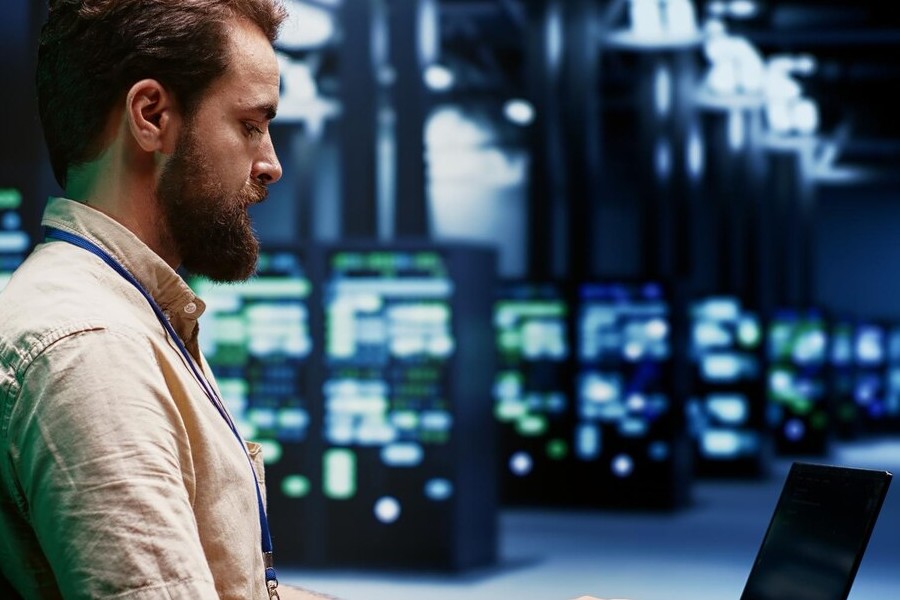
What Is Hosted PBX VoIP?by Jeff G Foster 4/12/2012 Technical Definitions The specific definitions of hosted PBX can differ from one provider to another. Specialized providers have added their own unique twists and definitions to the basic, technical meaning of hosted PBX as a means of branding and marketing. The bottom-line doesnt change, however, that hosted PBX is simply that: PBX that is hosted. The telephone switchboard hardware known as Private Branch eXchange (PBX) is usually located in the premises of the user. The difference with hosted PBX is that this piece of hardware is located or "hosted" elsewhere, typically along with the call platform. The consumers then simply typically connect to the host (and the platform and PBX hardware) via IP. Benefits of Hosted PBX VoIP The inherent advantages of hosting a service spillover to hosted PBX VoIP, and then there are a few benefits related to the technology as well: Lower maintenance costs - As the call platform and PBX is hosted elsewhere, maintenance costs associated with keeping these in-house are also transferred to the host. This means that you simply pay the host for maintenance as part of a service package - which in essence lowers your cost for maintenance, because all of the hosts other clients also pay for the maintenance of the same ... |
How to Integrate Google Voice With SIPby Bhagwad Park 4/12/2012 However, we have found ways to integrate Google voice with an existing SIP system. If you have an SIP provider, an SIP client and are reachable using any VoIP number, its easy to set up Google voice to work with it. Since Google voice allows you to enter any number of telephone addresses, simply enter your SIP address into the field and Google voice will forward those calls to you. But what if you subscribe to a free SIP service which doesnt have its own telephone number? Many providers allow you to sign up without any registration fee but charge you when you want to obtain a telephone number from them. Earlier, there were quite a few websites giving out free US telephone numbers and that was great while it lasted. Unfortunately, most of the services have now shut down and is no ... |
Getting the Right PBX Service for Your Businessby A. James 4/12/2012 How many employees you expect to have in the next three years? Will you want calls routed to employees in remote locations? Decide on all these and all similarly important factors before you make up your mind on the choice of PBX. Apart from the standard features, you should consider the following extremely useful optional features while deciding on the right PBX for your business needs: Auto-attendant: This is a great feature as it will free your employees from picking up the phone every time it rings. Besides, when customers hear a computerized system with options, it can make them believe they are dealing with a large corporation. Conferencing: You will find teleconferencing facility cost-effective, help you arrive at business decisions faster and also contribute to overall employee productivity. Call hunt: This is yet another valuable feature. If one employee doesnt answer the phone, the call will automatically forward to another person instead of going directly to voicemail. Expandability: Whichever PBX you opt for, make sure there is adequate expandability provision. Your business will be growing and you will be recruiting more and more employees and you can ill-afford to keep ... |
VoIP - Everything You Want to Knowby Bhagwad Park 12/28/2010 Part of the confusion of VoIP stems from its flexibility - which is one of its greatest strengths. There are many implementations of VoIP and its easy for a person to become a VoIP provider given a modest set of means. Since were still in the early days of VoIP, many businesses are experimenting with their offerings, trying to find out which ones work and which ones dont. But underneath it all, the concept of VoIP is a simple one. Put simply, VoIP uses the Internet which enables you to talk to someone else at the other end of the line. Just like you watch YouTube videos with sound, voice signals can travel from person to person over the Internet. In principle, this should be easy. We all use email and many of us use it for free. Yet VoIP isnt free for two good reasons. In the first place, VoIP data isnt like your regular web page data. It needs to ... |
How To Get a Phone Number That Forwards Callsby Nikki A Lee 12/28/2010 Most businesses have the need to get a phone number for their ads and websites. VOIP providers have many options that they offer with their service above traditional phone companies. Get local numbers for regional ads and a toll-free number for websites and national campaigns. Features like call forwarding, call reporting, simultaneous callers, and analytics integrations are available through hosted providers. Call reporting gives you the option to track all of your calls and ads using the reporting package. Several different styles of graphs are available for viewing (stacked, line, pie) and can also be viewed in different time increments (daily, weekly, monthly). The reports can also be downloaded and emailed. Reports display average call lengths, total call lengths, and the call counts. Call forwarding allows you the option to set a schedule based on the time of day and day of the week so that calls will be sent to another phone line. This can be a cell phone, office phone, or home phone. You can also look at all of your online ad campaigns alongside call statistics using the analytics integration options. By integrating call data with online web traffic, you can see which ads are producing the most clicks and calls for you business. Simultaneous callers is a feature where you can have the service route your calls so that your customers will not have to hear a busy signal when calling you. This is available for up to eight callers. Some providers offer voicemail and faxing plans as ... |
Switching to VOIP for Business Is a Wise Decisionby Mary Thomson 11/20/2010 VOIP is an economical and useful telephone line option for businesses as well as for personal use. It has been established that getting around in this age of communication age without a phone connection is just not possible. Using VOIP for business purposes is seriously a great decision which results in much cost saving. VOIP option will be much cheaper than a land line connection and the quality of the calls will also get better whereby the problem of poor quality calls will cease to exist. If you are running a small business then basic VOIP connection with a single number attached to it will serve all your business needs. This will take care of you receiving calls while at the same time ensuring that you are able to make calls yourself when the need arises. A basic VOIP connection will not serve the purpose in the case of a large administration. There is no use of having one number when there are more than 10 to 15 people present in the office together. Everyone will not find it feasible to make it all the way to the phone line in order to place their call. For larger businesses, a system of integrated phone lines should be more like it and there could also be some advanced features included in the VOIP connection. These advanced features should include the call forwarding facility so that calls from outside can be directed to the appropriate office member as well as the call diverting option so ... |
Security Considerations for Mobile VoIP Implementationsby Saiju George 11/20/2010 Among the most promising aspects of broadband telephony is mobile VoIP. In its most basic form, mobile VoIP is simply porting a call through a mobile or wireless network such as WiFi instead of passing through a wired connection. However, current and future trends on VoIP involve a much more comprehensive and complicated service that encompasses a mixture of wired and wireless technologies in the licensed (4G) and unlicensed (WiFi) radio spectrums. Mobile VoIP calls Dedicated and dual-mode phones are currently available for making VoIP calls wirelessly. The dedicated phones are useful for VoIP calls whenever there is available wired or wireless Internet connection, and typically have features that enable monitoring of call quality and enhance security of voice calls. On the other hand, the dual mode phones such as the UMA-enabled cellphones from Blackberry, Nokia and Samsung allow seamless porting of calls from mobile signals to license-free signals in WiFi hotspots, thereby reducing call costs and greatly increasing flexibility. However, these calls are secure only insofar as these are within the ambit of mobile carriers, as vulnerabilities in wireless LAN systems are still prevalent. Security in mobile VoIP Wireless systems means there are no tell-tale wires that would indicate unauthorized connections; it also means sending signals that are not able ... |
Challenges to Integrating Video and Mobile VoIPby Saiju George 11/20/2010 The way things stand now, the convergence of VoIP and video into a common means of data transmission is not far off in the future. In fact, todays mobile connections via 3G and video conferencing capabilities can be regarded as precursors of future technology that will seamlessly weave together the two applications. The advantage of video calls is obvious: they connect users in an entirely different way from a voice-only call, a way that gives a more personal and warm presence. It is for this reason that some businesses prefer having video conferences rather than conference calls, as the former allows participants to see each other and have more animated discussions. Moreover, having video calling capabilities gives multi-state and multinational companies the chance to minimize travel expenses as well as time wasted on the road by executives and staff. Constraints in converging VoIP and video While the conversion of voice calls into packetized VoIP data transmissions is relatively easy, packetizing video is another matter. For one, video requires ever-increasing screen size and resolution, which in turn needs corresponding network bandwidth improvements. In short, video requires more throughput than plain VoIP calls, as its signal must carry the moving picture in addition to voice - a critical constraint that must be overcome to make the convergence of video and VoIP successful. Another constraint is the problem of synchronization: since video requires several data stream to be in sync, data loss rates due to lack of capacity or poor network signal may give rise to significant ... |
How to Quickly Solve VoIP Voice Quality Issuesby Jamie D Richardson 11/20/2010 VoIP, Voice over Internet Protocol, has revolutionised the way we communicate both socially and professionally. Users across the world have signed up to free services offered by companies such as Skype and Vonage, presenting low cost solutions to long distance communication, loved ones can now connect across the oceans for free and keep in touch via their internet enabled devices. Businesses reap even greater benefits from the use of VoIP technology as a way of keeping overhead costs to a minimum whilst maintaining a reliable and functional service. Some CEOS have specifically redesigned their companys operational strategies to incorporate VoIP systems, which in turn have helped to reduce office space, excess personnel and as mentioned, driven down overheads. Not all VoIP implementation has been a success though with dropped calls and unclear transmission causing headaches for private consumers and businesses alike. When your VoIP system shows problems with quality, firstly, what you must not do is to start altering settings and tampering with equipment without a plan. Problems with voice quality can be caused by numerous sources, including your ISP The digitized speech that is carried by VoIP systems travel in protocols call packets. For packets to pass from one point in the internet to another they must pass through a series of routers or hops, almost like gateways. Each router is limited to how much data it can pass on, known as the throughput and it is this throughput that is determined by the physical bandwidth, any errors and your systems CPU. ... |
Should You Get A Video Phone?by Rick Phares 11/20/2010 The basic home video phone sports several different names. I will refer to most of them throughout this article so you may become familiar with the varying terms but generally speaking they all mean the same and they all refer to the same piece of machinery. An Internet video phone is a home telephone that operates digitally as opposed to running on an analog system. Traditional home phone service operates via telephone wires, this is analog. Since we are deep into the digital age it only makes sense that home telephone technology would partake in the shift as well. To have digital phone service means, in its most basic form, that your calls are placed over the Internet, not a wire. Digital phone service is also termed Voice Over Internet Protocol, or VOIP for short. VOIP video phones make perfect sense with the implementation of these digital phone services since video is already widely used on the Internet. The basic components and procedures are the same, just applied to telephone technology and systems. So, now we know what an Internet video phone is, lets discuss who should use one. The simple truth is that sooner or later we will all be using them. The technology is here, its currently being used and will only expand to include all of society as the years pass. However, in the beginning, before VOIP video phones hit the mass market, there will be certain sectors that will be drawn to it first. Heres a look at a few: ... |
VoIP Softswitches: The Revolution In Telecomby Adnan Khawaja 11/20/2010 Nextone technology is a new development in the arena of telecommunications industry. It has made life easier for wholesale telecom operators. The telecommunications industry has witnessed innovations of massive proportions in recent years. A significant development in the industry was the development of softswitch technology which completely changed the dynamics of the industry. To appreciate properly the benefits of the technology, it would be helpful to know the basics of the technology. Understanding VoIP Technology VoIP technology is a method of converting voice signals into digital IP packets and sending it by using the channel of the Internet to the final destination. A cost effective method of communication, the technology is fast advancing. Defining Softswitch A softswitch is a centrally located device within a telephone network. Supported by specialized software, it is used to link calls from one telephone line to the other. Earlier, the functions of the softswitch were undertaken by hardware, when physical switches were used for the routing of calls. In laymans terms, the function of the softswitch is to separate the hardware and software of a circuit switched network. How It Works The objective of the softswitch is to control connections at the junction point between the circuit and packet networks. To attain this goal, a single device containing both the switching logic and the switching fabric can be used. However, modern technology decomposes this device into a Call Agent and a Media Gateway. The Call Agent enables functions such as billing, call routing, signaling, call services and so on. A Call Agent in ... |
Internet VoIP On The Rise As A Small Businesses Phone Solutionby Brandi Armstrong 11/20/2010 Internet VoIP was once the outcast of the telecom world. Now however, it is on the rise with small businesses across the nation. Its reliability, flexibility and cost have propelled it to a very efficient and effective communications tool. All small business owners know the importance of low cost overhead. Working smart with your money has never been more important than it is in todays economy. A very efficient way for small businesses to save huge dollars is by subscribing to a hosted Internet VoIP service, also referred to as Internet phone service. It is a method for making telephone calls by using the Internet. The technology became available around 1980 but with the recent advancements it has become a strong replacement for the traditional land line service PSTN (public switched telephone network). One of the reasons that Internet VoIP is so popular is because it is very inexpensive as well as dependable. All of the equipment and headaches are hosted by the provider so all the business needs to worry about is the Internet connection and a telephone. In some cases youll be able to use the same telephones that you used for your land-line while others a special VoIP phone will be the best solution. The call quality is so good that rarely would anyone know that you were not using a land line. The provider keeps all the updates and relative maintenance up to date so having equipment or a service that becomes obsolete is not a concern. The cost ... |
Advantages of Making Long Distance Calls Using VoIPby Costas Kariolis 11/14/2010 Long distance calling can be a problem for many people due to a variety of constraints. Many may be inclined to just use a regular landline phone, however there is an alternative. VoIP is a flexible yet simple means of conducting a normal phone call over long distance. VoIP or Voice over Internet Protocol has many advantages. Firstly, it does not require mass amounts of new hardware. All that is required to get you started is the high speed internet, with connection to a modem or router, a VoIP phone or a PC if you do not have access to one and a service with a voice service provider. Its as easy as that, and very easy to set up. VoIP allows communication to any telephone across the entire the world with some service providers. With certain providers this means that you can make a call to anyone, regardless of the distance, to any phone in the world even if they are mobile or landline. The technology provides so much more benefits than just using a standard landline phone. Conference calls can be made via VoIP allowing you to contact multiple people all the same time, which is great for bringing multiple people together over the phone. It may sound like a very complicated piece of kit, but in fact it can be as simple as a normal phone call. There is a normal dialing tone as well as keeping the same number that you normally use (with the option of changing the number), ... |
How Fax Services Are Being Modernized by IPby Bhagwad Park 11/14/2010 In all the excitement about traditional PSTN voice systems being replaced by VoIP, Fax seems to not have gotten the attention it deserves. Yet, in many ways converting old fax systems to a new one can save you a lot of money, just like VoIP can save you from unnecessary telephone bills. In this article, we take a look at how new protocols and devices are replacing the old infrastructure. Old Fax systems use a standard formalized way back in the 1980s called T.30 which has seen worldwide adoption. Most fax machines you have seen use the T.30 protocol and two fax machines using the same protocol have no problems communicating with each other. But what happens when your organization switches to VoIP and gives up its telephone connection. We all know that fax machines have their own telephone number and rely on the PSTN system to operate. Is it possible to migrate the fax machines too? Unfortunately, VoIP technology is uniquely suited for voice data. Meaning that certain optimizations that VoIP systems use for sound are very unsuitable for data transmission such as that contained in an image. The end result is most unsatisfactory. Therefore, we needed a new protocol to tell the encoders and intermediate points that the data coming through isnt web or voice data, but something else. In 1998, the T.38 protocol was released. Its important to note that T.38 cant work on its own. We still need a protocol which constructs and sets up the call in the ... |